
In today’s digital-first economy, businesses in Saudi Arabia are increasingly dependent on technology to drive growth, productivity, and customer satisfaction. From cloud infrastructure to cybersecurity, your IT systems are the backbone of your operations. But what happens when these critical systems fail? Who do you call? How quickly will they respond? What guarantees do you have?
This is where an IT Service Level Agreement (SLA) becomes not just important but essential for business continuity and success.
What is an IT Service Level Agreement (SLA)?
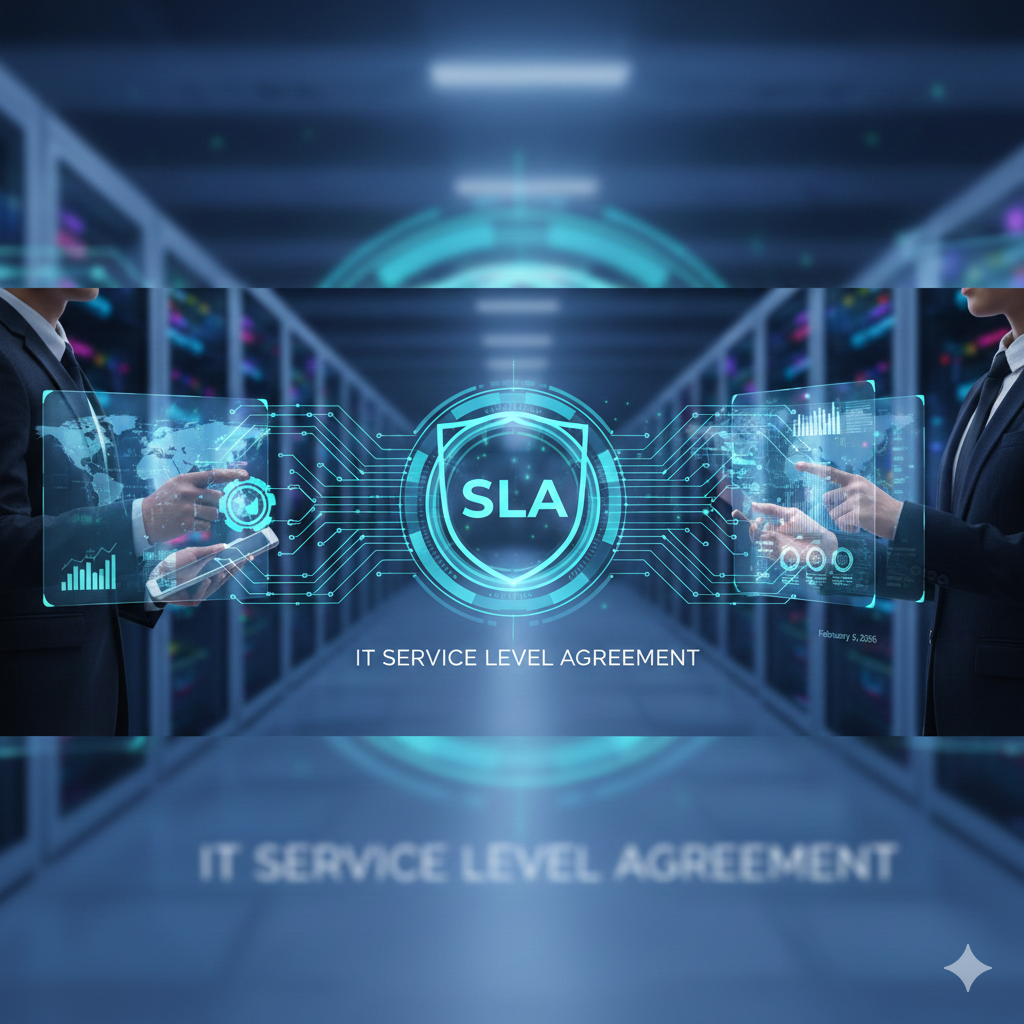
An IT Service Level Agreement is a formal, documented contract between a business and its IT service provider that clearly defines the level of service expected, guaranteed response times, performance metrics, and responsibilities of both parties. Think of it as your insurance policy for IT services—a promise that ensures your technology infrastructure receives the attention and support it deserves.
In the context of Saudi Arabia’s rapidly evolving digital landscape, particularly with Vision 2030‘s emphasis on digital transformation, having a robust IT SLA is crucial for businesses looking to stay competitive and compliant.
Key Components of an IT SLA
A comprehensive IT SLA typically includes:
- Response Time Guarantees: How quickly will support respond to different priority levels of issues?
- Resolution Time Commitments: Maximum time frames for resolving various types of problems
- Uptime Guarantees: Percentage of time systems should be operational (e.g., 99.9% uptime)
- Service Coverage Hours: 24/7 support vs. business hours only
- Scope of Services: What’s covered and what’s not
- Performance Metrics: Measurable standards for service quality
- Escalation Procedures: Clear paths for urgent issues
- Penalties and Remedies: What happens if service levels aren’t met
The Hidden Costs of Operating Without an IT SLA
Many Saudi businesses, particularly SMEs and growing enterprises, operate without formal IT SLAs, often relying on informal arrangements or ad-hoc support. This approach might seem cost-effective initially, but the hidden costs can be devastating.
1. Unpredictable Downtime
Without an SLA, there’s no guarantee of how quickly your IT issues will be addressed. A server crash at 3 PM on Thursday could mean waiting until Sunday or Monday for resolution, potentially costing your business:
- Lost Revenue: E-commerce sites, booking systems, and customer-facing applications offline
- Productivity Loss: Employees are unable to access critical systems and data
- Customer Dissatisfaction: Delayed services and poor customer experience
- Reputation Damage: In today’s social media age, IT failures become public knowledge quickly
Studies show that IT downtime can cost businesses anywhere from SAR 20,000 to SAR 500,000+ per hour, depending on the size and nature of the business.
2. No Clear Accountability
When problems arise without an SLA, you’ll often hear:
- “We’ll get to it as soon as possible.”
- “We’re working on it.”
- “It’s not our responsibility.”
Without documented service levels, there’s no accountability, no recourse, and no way to measure whether you’re getting the service you’re paying for.
3. Security and Compliance Risks
Saudi Arabia has implemented strict data protection regulations, including the Personal Data Protection Law (PDPL) and industry-specific compliance requirements. Without an SLA that clearly defines security responsibilities, backup procedures, and incident response protocols, your business could be:
- Non-compliant with Saudi regulations
- Vulnerable to data breaches
- Exposed to legal liabilities
- Unable to demonstrate due diligence to regulators
4. Budget Uncertainty
Without predefined service levels, IT costs can spiral out of control. Every issue becomes a negotiation. Emergency support might come with premium pricing. There’s no predictability in your IT budget, making financial planning nearly impossible.
The Strategic Benefits of Having an IT SLA
A well-crafted IT SLA transforms your IT support from a reactive expense into a strategic business asset. Here’s how:
1. Guaranteed Response and Resolution Times
With an SLA, you know exactly when help will arrive. For example:
- Critical Issues (complete system failure): 15-30 minute response time
- High Priority (major functionality impaired): 1-2 hour response time
- Medium Priority (minor functionality issues): 4-8 hour response time
- Low Priority (general inquiries): 24-48 hour response time
This predictability allows you to plan business continuity measures and set realistic expectations with your own customers.
2. Proactive System Monitoring and Maintenance
Quality IT SLAs don’t just react to problems; they prevent them. Your service provider should include:
- 24/7 system monitoring to detect issues before they impact users
- Regular maintenance windows for updates and patches
- Performance optimization to prevent degradation
- Security monitoring and threat detection
- Capacity planning to prevent resource constraints
This proactive approach can reduce IT incidents by 60-70% compared to reactive-only support models.
3. Clear Financial Protection
SLAs typically include service credits or penalties if guaranteed service levels aren’t met. This means:
- You’re compensated if your provider fails to deliver
- Your provider is financially motivated to meet commitments
- Budget predictability with fixed monthly costs
- No surprise bills for basic support services
4. Enhanced Business Credibility
For businesses in Saudi Arabia working with government entities, international partners, or large corporations, having formal IT SLAs demonstrates:
- Professional operational standards
- Commitment to reliability and quality
- Risk management maturity
- Compliance readiness
This can be the difference between winning and losing major contracts.
5. Alignment with Vision 2030 Goals
Saudi Arabia’s Vision 2030 emphasizes digital transformation across all sectors. Having robust IT SLAs supports this vision by:
- Ensuring reliable digital infrastructure
- Supporting e-government initiatives
- Enabling cloud adoption and digital services
- Facilitating smart city implementations
- Supporting the growth of the digital economy
Common IT Issues Saudi Businesses Face Without SLAs
Understanding the specific challenges can help you appreciate the value of an SLA:
Network and Connectivity Issues
Saudi businesses often struggle with network reliability, especially when connecting multiple branches across the Kingdom. Without an SLA, a network outage in Jeddah might leave your Riyadh headquarters blind to the issue for hours.
Cybersecurity Threats
With cyber attacks increasing across the Middle East, businesses without SLA-backed security monitoring are vulnerable to:
- Ransomware attacks
- Data breaches
- Phishing campaigns
- DDoS attacks
An SLA ensures 24/7 security monitoring, rapid incident response, and clear protocols for breach notification and recovery.
Cloud Service Disruptions
As businesses migrate to cloud platforms like Microsoft 365, Google Workspace, or Azure, they need guaranteed support for:
- Email outages
- File access issues
- Application performance problems
- Data synchronization failures
Hardware Failures
Servers, storage devices, and networking equipment all fail eventually. Without an SLA, you’re at the mercy of vendor response times and parts availability.
What Should Be Included in Your IT SLA?
When evaluating IT service providers in Saudi Arabia, look for SLAs that include:
1. Comprehensive Service Coverage
Your SLA should cover all critical IT services:
- Network infrastructure and connectivity
- Server management and maintenance
- Cloud services support (Microsoft 365, Azure, Google Workspace)
- Cybersecurity monitoring and response
- Backup and disaster recovery
- Help desk support for end users
- Hardware and software troubleshooting
2. Defined Priority Levels
Clear categorization of issues ensures an appropriate response:
Priority 1 – Critical: Complete system failure, major security breach, or business-stopping issue
- Response Time: 15-30 minutes
- Resolution Target: 2-4 hours
Priority 2 – High: Significant functionality impaired, affecting multiple users
- Response Time: 1-2 hours
- Resolution Target: 4-8 hours
Priority 3 – Medium: Minor functionality issues, affecting individual users
- Response Time: 4-8 hours
- Resolution Target: 24 hours
Priority 4 – Low: General questions, minor inconveniences
- Response Time: 24-48 hours
- Resolution Target: 72 hours
3. Uptime Guarantees
Industry-standard uptime commitments:
- 99.9% uptime = Maximum 8.76 hours of downtime per year
- 99.95% uptime = Maximum 4.38 hours of downtime per year
- 99.99% uptime = Maximum 52.56 minutes of downtime per year
4. Security and Compliance Commitments
Your SLA should explicitly address:
- PDPL (Personal Data Protection Law) compliance
- Data encryption standards
- Backup frequency and retention
- Incident response procedures
- Regular security audits
- Vulnerability management
5. Clear Communication Protocols
Establish how you’ll be kept informed:
- Regular status reports (weekly/monthly)
- Incident notifications (email, SMS, phone)
- Scheduled maintenance announcements
- Performance dashboards and metrics access
- Quarterly business reviews
6. Scalability and Flexibility
As your business grows, your IT needs will evolve. Your SLA should include:
- Provisions for adding users and services
- Cloud resource scaling procedures
- Emergency capacity expansion
- Seasonal or event-based support scaling
Industry-Specific SLA Considerations in Saudi Arabia
Different sectors have unique IT requirements:
Healthcare Sector
- HIPAA-equivalent patient data protection
- 99.99% uptime for critical patient systems
- Emergency response protocols for medical equipment IT
- Telehealth platform support
Financial Services
- SAMA (Saudi Central Bank) compliance requirements
- Real-time transaction system monitoring
- Advanced cybersecurity measures
- Disaster recovery testing (minimum quarterly)
Retail and E-commerce
- Peak season support scaling (Ramadan, Eid, sales events)
- Payment gateway uptime guarantees
- POS system support
- Inventory management system reliability
Education
- Academic calendar-based support intensity
- Student data protection compliance
- Learning management system (LMS) uptime
- Remote learning infrastructure support
Government and Public Sector
- Yesser e-Government Program alignment
- Citizen service continuity
- Interagency system integration support
- Public data security requirements
How Trackinst’s IT SLA Protects Your Business
At Trackinst, we understand that every minute of downtime affects your bottom line and reputation. Our comprehensive IT SLAs are designed specifically for Saudi businesses, with:
24/7/365 Support Coverage
Round-the-clock monitoring and support, including weekends and holidays, ensuring your business never stops.
Guaranteed Response Times
- Critical issues: 15-minute response guarantee
- High priority: 1-hour response guarantee
- All issues tracked and documented with transparent SLA compliance reporting
Proactive System Management
- Continuous monitoring of all critical systems
- Automated alerts for potential issues
- Regular system health checks and optimization
- Monthly performance reports
Comprehensive Service Scope
Our SLAs cover the full spectrum of IT services:
- Network infrastructure and security
- Cloud services (Microsoft 365, Azure, Google Workspace)
- Cybersecurity monitoring and incident response
- Server management and maintenance
- Help desk support for your team
- Backup and disaster recovery
- Hardware and software support
Saudi Market Expertise
- Understanding of local business practices and expectations
- Arabic and English support teams
- Knowledge of Saudi regulatory requirements (PDPL, SAMA, etc.)
- Local presence in Riyadh for on-site support when needed
- Experience across Saudi industries and sectors
Transparent Pricing and Performance Metrics
- Fixed monthly fees with no surprise charges
- Real-time access to SLA performance dashboards
- Monthly SLA compliance reports
- Service credits if we fail to meet commitments
- Quarterly business reviews to optimize your IT strategy
Taking the Next Step: Implementing Your IT SLA
Transitioning to an SLA-backed IT support model is straightforward:
Step 1: IT Infrastructure Assessment
We conduct a comprehensive review of your current IT environment, identifying:
- Critical systems and applications
- Current pain points and vulnerabilities
- Compliance requirements
- Growth projections and scalability needs
Step 2: Customized SLA Design
Based on the assessment, we design an SLA tailored to your:
- Industry requirements
- Budget parameters
- Risk tolerance
- Business objectives
- Regulatory obligations
Step 3: Seamless Transition
We manage the transition from your current arrangement to SLA-backed support:
- Knowledge transfer from existing providers
- System documentation and baseline establishment
- Team training on support procedures
- Gradual handover to minimize disruption
Step 4: Ongoing Optimization
Your SLA isn’t static, we continuously refine it based on:
- Performance data and trends
- Your evolving business needs
- Technology changes
- Industry developments
Conclusion: Don’t Leave Your Business Success to Chance
In Saudi Arabia’s competitive and rapidly digitizing business environment, reliable IT infrastructure isn’t optional—it’s essential. An IT Service Level Agreement provides the guarantees, accountability, and peace of mind you need to focus on growing your business rather than worrying about technology failures.
Without an SLA, you’re gambling with your:
- Revenue and profitability
- Customer satisfaction and retention
- Employee productivity
- Regulatory compliance
- Business reputation
- Competitive position
With a comprehensive IT SLA from Trackinst, you gain:
- Predictable, guaranteed IT support
- Proactive system monitoring and maintenance
- Clear accountability and performance metrics
- Financial protection and budget certainty
- Strategic IT partnership aligned with your business goals
Ready to Protect Your Business with a Comprehensive IT SLA?
Don’t wait for the next IT crisis to realize the value of guaranteed support. Contact Trackinst today to discuss how our customized IT Service Level Agreements can provide the reliability, security, and peace of mind your business deserves.
Contact Us Today:
- Phone: +966 59 771 6771
- Email: info@trackinst.com.sa
- Office: Office # 6, Mather Complex, Al Olaya, Building 24, Riyadh 12554
- Website: www.trackinst.com
Our IT specialists are ready to conduct a complimentary assessment of your current IT infrastructure and design an SLA that protects your business and supports your growth.
About Trackinst
Trackinst is a leading IT service provider in Saudi Arabia, offering comprehensive IT solutions including cybersecurity, cloud services, network infrastructure, and 24/7 IT support. With deep expertise in the Saudi market and commitment to excellence, we help businesses leverage technology to achieve their goals while maintaining the highest standards of reliability, security, and service quality.
Frequently Asked Questions (FAQ)
Q: How much does an IT SLA typically cost?
Answer: IT SLA costs vary based on your infrastructure size, service scope, and required response times. Most Saudi businesses find that the cost is offset by reduced downtime, improved productivity, and eliminated surprise IT expenses. Contact us for a customized quote.
Q: Can I get an SLA if I’m a small business?
Answer: Absolutely! We offer scalable SLA packages for businesses of all sizes, from startups to large enterprises. Every business deserves reliable IT support.
Q: What happens if Trackinst doesn’t meet the SLA commitments?
Answer: We provide service credits or compensation as outlined in the SLA. However, our track record shows 99.8% SLA compliance across all clients.
Q: Do you provide SLAs in Arabic?
Answer: Yes, all our SLA documentation is available in both Arabic and English, and our support team is bilingual.
Q: How quickly can we start with an SLA?
Answer: After an initial assessment (typically 1-2 days), we can have your SLA drafted and services activated within one week.
Q: Is the SLA legally binding?
Answer: Yes, our SLAs are formal contracts that are legally enforceable under Saudi law, providing you with full legal protection.